




“Shadrack and I went on a cancer journey together for 3 years. He should now be 12 years old.”
I had been diagnosed with leukaemia in 2012 and been told I’d never have a child of my own. During my chemotherapy treatment, a friend called me and told me that there was this boy called Shadrack who had cancer and whose family felt they were unable to care for him in their country. I adopted him when he was 9 years old. We shared our life together here in Kenya.
Shadrack had a huge tumour which meant that people were scared to be with him. It was tough because we were both going through treatment. I had to pause my treatment to focus on getting him better. At first he was diagnosed with a sarcoma, but then after two years of treatment the doctor discovered it was Hodgkin’s Lymphoma. 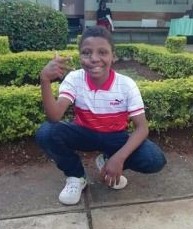
At first they weren’t honest with us, so I had to figure out how to do things. All I knew was that the doctor said we were looking at a few months. When I was referred to palliative care I didn’t know what it was and I filled in the gaps in a negative way. I thought it was just about dying straight away. The only people that are given information are those able to go to hospices or the urban hospitals, but there are so many vulnerable families in rural areas who have nowhere to go. Those parents who think cancer is a curse or a punishment for something they did. The government needs to urgently intervene to organise and fund education for these parents.
I needed to find out about it for Shadrack and found ICPCN’s website where I read their materials and knew there are other parents out there going through it. When you know what palliative care is, you can embrace it as a process. If I knew then what I know now, maybe it wouldn’t have hurt as much as because I would have been prepared, whether for a day, or a month, but at least I would have known what was coming, and I would have maybe created more special time with him.
What eventually helped me was joining a support group where I could talk to other families, other women, who had children battling cancer. In time I formed my own group and I ran that for several years.
At first I had assumed that because he was a child he wouldn’t be able to express himself, but I learned it was good to sit down with him and ask him about his expectations and his fears. It was hard having these conversations as a parent, but they really helped. He could tell me how he was feeling. I was shocked because he was open to talking about the next life, something I’d not felt able to talk about myself. He helped me to open up about my fears and how I felt. I gained so much hope from him because he was a fighter. He gave me a reason to hang on.
At the hospital they had a special ward for children with cancer, but parents were not allowed to stay. And at that time I was quite unwell and had stayed at home for a few days. He called me and said ‘Mom, don’t come this Monday, come the Monday after’. I told him I would come on the Friday, but he insisted that I wait until the Monday. On the Friday I called him, we talked, and he said the doctor had told him he could be discharged.
I don’t know what happened, because the Monday I went in for my son he wasn’t there. It was one of the toughest things, because I didn’t see it coming. It was hard, because I didn’t even get the time to say goodbye.
Grief is hard. It’s just there with you. After my son passed on, I’ve not had the strength to be able to do much with the support group. I’m now doing much better and have been in remission for 3 months. It’s been so difficult to heal, but I will continue and share what I know now about palliative care – what I’ve learned from ICPCN. Because now I know that palliative care can bring positive things. And I know together we will heal, in Shadrack’s name.