


This is the story of Asma (name changed), an 11-year-old child diagnosed with a neuroectodermal tumour of the brain.
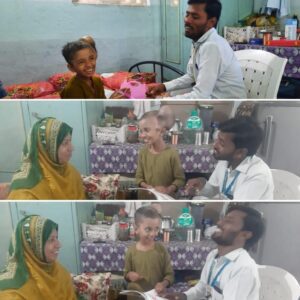
After undergoing surgery, radiation, and chemotherapy, Asma was registered for home care follow-up with us before discharge. However, just as she was discharged, the lockdown was announced due to the pandemic outbreak, leaving her father devastated, feeling completely lost and unsure about how his child would receive care.
The first home care visit was a turning point for Asma’s family, as they realized they had support for her postoperative symptom management and medication needs. Asma did well for two months with regular home visits, but her tumour recurred and after discussions with oncologists, Asma and her parents chose comfort care and symptom management, requesting our team’s weekly high-priority visits. Asma made it clear that she never wanted to return to the hospital. We reassured her parents that any worsening symptoms would be managed promptly. Despite her condition, Asma remained a cheerful child, eagerly awaiting our visits. She took pride in preparing for our visits, ensuring her bed was neat and dressing up well.
For over two years, Asma had minimal symptoms, enjoying activities like colouring, reading, and playing teacher-student games at home. However, over the next ten months, her symptoms gradually increased, requiring medication for headaches, vomiting, sudden crying episodes, and constipation. Despite this, she continued to interact with us, often insisting on taking pictures together. She would praise us, saying, “You are good doctors. You don’t poke or hurt anyone.”
Asma had our contact saved in her mother’s phone and would ask her mother to call us whenever she felt uncomfortable. Many visits exceeded the allotted time because she didn’t want us to leave. She would share stories from school, laughing heartily before realizing her illness prevented her from attending, leading to tears. We supported her through these emotional swings, allowing her to express her feelings freely.
Over the following six months, Asma’s symptoms increased. I vividly recall one visit during this time; upon entering her room, we found it eerily silent. Asma lay on her bed, staring blankly at the ceiling. She didn’t respond to our voices or acknowledge us, which was heartbreaking. Seeing her bedridden, unresponsive, and without speech or vision, our goals of care shifted.
Asma’s father found it hard to think about her worsening condition and worried about the days ahead. Sadly, a month later, he developed symptoms of headache, delirium, and seizures and was diagnosed with glioblastoma multiforme. He passed away shortly after. This loss was devastating for Asma’s mother, and we stood by her, offering support during her bereavement. Despite her grief, she found strength to care for her bedridden daughter. She took some comfort in knowing that Asma was unaware of her father’s passing.
Our visits continued, focusing on caring for Asma’s bedsores, managing tube feeds, and ensuring her medication needs were met. Her medical requirements had stabilized, requiring less intervention. Instead, each visit became an opportunity to share in their family moments, to empower Asma’s mother to become financially independent, and to discuss Asma’s gradually deteriorating condition. An advance care plan was established, honouring Asma’s wish to never return to the hospital. Her mother expressed gratitude for our consistent support during their most challenging times and found solace in our presence during her anticipatory grief for Asma. For the past eight months we have continued to prioritize weekly visits, during which we refill her pain medications as needed and spend time with her mother, reminiscing about the moments when Asma spoke, laughed, and interacted with us.
Asma’s mother holds on to the fragile thread of caregiving, pouring all her love into Asma by talking to her and gently caressing her, hoping that she is listening and finding comfort in it. Asma’s favourite colouring books, purse, and colouring box are always within reach on her air bed, speaking volumes despite the deep silence that surrounds them.
Asma’s story was kindly provided by Dr Archana Ravikiran.