


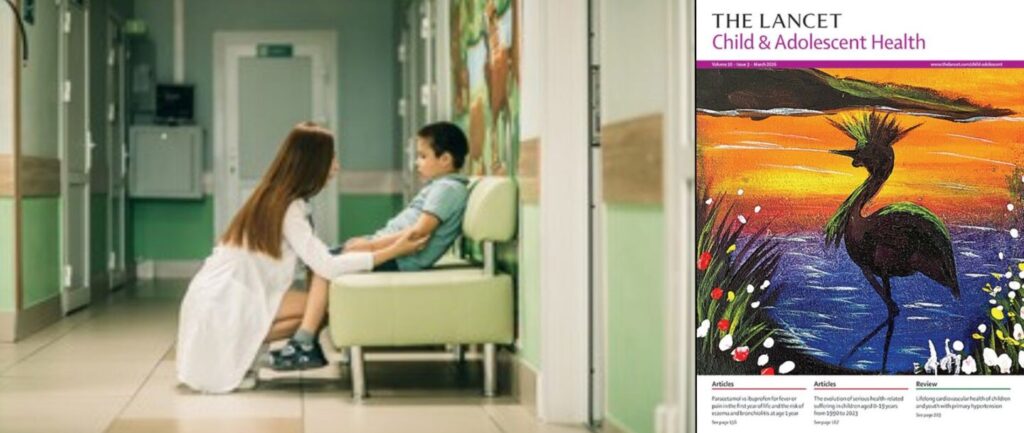
According to a new study published in The Lancet Child & Adolescent Health, 10.6 million children aged 0 to 19 were living and dying with Serious Health-related Suffering (SHS) in 2023—96% in low- and middle-income countries. (Share link to access a copy of the publication: https://bit.ly/4rwuiuQ).
Previous estimates of the global total of children requiring palliative care have varied widely, from 1.2 million to 21 million. Drawing on a range of sources, including the 2018 Lancet Commission on palliative care and pain relief, the study authors generated estimates of SHS among children from 1990 to 2023. “Estimating palliative care need globally is complex and different methods have been used. Given challenges in data availability, access, and inclusion, the global burden of SHS among children is likely to be even greater than reported. However, this study is the first to rigorously analyse children’s SHS, based on the Lancet Commission methodology, using child-specific criteria over time and is part of the process of refining and developing the methodology.”, says Prof Julia Downing.
SHS refers to “pain, distress, and suffering that may be physical, psychological, social, and spiritual, linked to life-threatening or life-limiting conditions, including end-of-life situations, that require medical intervention and can be alleviated through palliative care.” In simpler terms, SHS can be understood as a proxy for palliative care need.
The results suggest a high concentration of SHS burden in 2023 among non-decedent children (children who survived beyond the year), at 81 % compared to 59% in 1990. The largest group of conditions causing SHS in 2023 was endocrine, metabolic, blood, and immune disorders, accounting for 51% of SHS. Insights are provided across 21 health conditions.
To improve palliative care for children, several key elements are necessary—empowered communities; robust policies for palliative care, research, education, and training; access to medicines; and the integration of services within existing health systems. The authors also highlight a “pervasive misconception that children do not experience pain to the same extent as adults”. This, in addition to disparities in opioid access, can leave children with moderate to severe pain without a clear path forward, prolonging suffering. With estimations of palliative care reach for children and their families being less than 10% globally, efforts must be made to increase access as children and their families are suffering needlessly. Children’s unmet palliative care need “epitomises the worst failings of global health, particularly because it is neither costly nor complicated to address”, say authors.
The authors hope their findings will spur advocacy for increased investment in palliative care for children globally, particularly where the need is greatest. “Our findings draw much-needed attention to the magnitude of SHS and opportunities to strengthen palliative care for this vulnerable population”, says author Prof Felicia Knaul.