Author – Lizzie Chambers, Programme Manager, ICPCN.
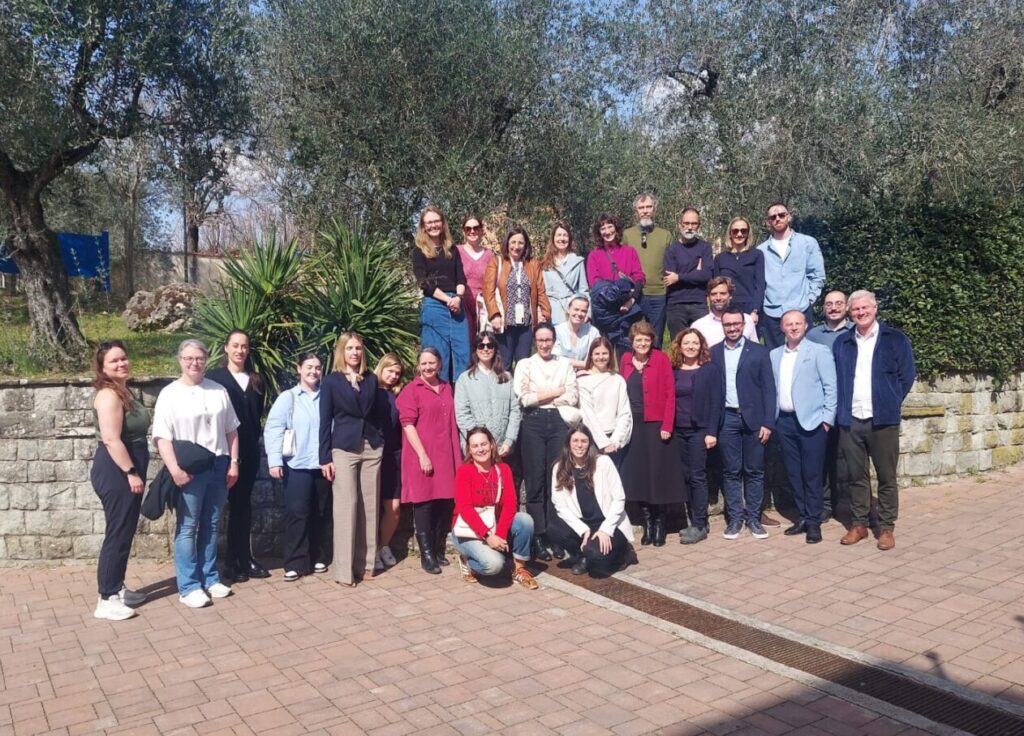
On 9-10th March members of the Palliakid research collaborativei gathered in Florence for the project’s 3rd General Assembly Meeting, generously hosted by Meyer Azienda Ospedaliera Universitaria.
During this year’s two-day meeting we heard from each of the eight workstreams about their progress over the year, plans for the next year and had valuable time together to discuss risks and ways to overcome any challenges that had emerged.
The interdisciplinary project aims to evaluate the feasibility, effectiveness and cost-effectiveness of new digital interventions for CYP with palliative care needs in different healthcare systems across Europe and to explore the factors that influence the engagement of children and families. As such, much of the focus of the project thus far has been the development of the suite of novel digital resources themselves:
- An Early Identification System – a clinically validated tool that will enable timely and precise identification of children, adolescents and young adults with palliative and end of life care needs.
- A ‘Hexcom’ tool – for comprehensive assessment of the needs of children and their families, including a symptom tracker.
- An ‘IMPACT’ tool – a comprehensive, personalised interdisciplinary care plan, which includes Advance Care Planning. This has been co-created to provide a version of the existing tool that is specific for children and their families. The new tool includes a holistic view of children’s palliative care that focuses on elements such as spiritual and cultural aspects, not limited just to medical needs. Three different interfaces have been developed for the child, family and professionals, with a simple version for siblings in development.
Each of the five clinical sites have also contributed a case study to be used as part of an XR (extended reality) capacity-building training system, aiming to provide a novel way for professionals to learn how to use the tools in different scenarios.
The project has now reached a crucial point as the Palliakid suite of digital tools are reaching readiness to be tested in the trial phase with the five clinical sites in Denmark, Finland, Italy, Latvia and Spain.
A collaborative of organisations has supported the development of the RCT and prospective study within the clinical sites. This has included the development of the study protocol, information and recruitment materials and provision of training to each site. Expert input regarding ethics and data management has contributed a rigorous process and best research governance practice to a complex project with multiple partners and sites in different countries.
An important highlight of the project so far has been the positive engagement from the start with young people and families through the Family Advisory Board and in each clinical site where families have co-created project materials.
As part of the communications workstream, there have been a number of dissemination and public engagement activities, including an Instagram takeover by the team in Copenhagen, webinars and roundtable events. All members of the consortium have taken opportunities to share the project, for example a Recorded Presentation on Palliakid from Sergi Navarro, the Project Coordinator and Principal Investigator, was shown at the ICPCN Conference in Manila and delegates at the EAPC Congress in Prague this year will have an opportunity to listen to several presentations about the project.
As the project progresses to the next phase, learning will be captured from the sites to underpin the development of policy and clinical guidelines to support implementation and the ICPCN is tasked with developing a sustainability plan for scale-up of the Palliakid resources across Europe and beyond. We look forward to seeing how the project continues to unfold and the potential benefits for children, young people and families.
To find out more, visit the project website: Home – Palliakid