Authors: Rizwana Hussain, Roshani Laxmi Tuitui, Dr Krishna Sagar Sharma
Nepal’s National Palliative Care Strategy identifies children’s palliative care training as a national priority. Many clinicians care for children with serious illnesses while specialist services continue to develop. To reduce this gap, national partners developed a standardized training manual to build capacity, create a shared clinical language, and guide consistent implementation across all levels of the health system.
How the work began
Dr. Krishna Sagar Sharma and Roshani Laxmi Tuitui led this initiative by engaging partners and technical contributors through the Children’s Palliative Care Leadership Program of Two Worlds Cancer Collaboration, where they participated as scholars in 2024. In May 2024, the Ministry of Health and Population hosted a national stakeholder workshop in Kathmandu. Clinicians, government officials, hospitals, cancer centers, children’s hospitals, and the Nepalese Association of Palliative Care jointly identified key content areas and shaped the structure for a national curriculum.
Key steps and achievements
After the leadership program, the National Health Training Center (NHTC) under the Ministry of Health and Population advanced the work through a structured process.
1. Government and technical review NHTC convened a series of meetings with government personnel, program staff, experts, and stakeholders. Together, they refined the training package and aligned it with national standards and training expectations.
2. Strengthening content through expert feedback National and international reviewers assessed the package for quality, sequencing, coherence, and usability. They reviewed the full set of materials, including the facilitator guide, participant guide, learning resources, and reference manual.
3. Pilot training across service settings NHTC coordinated a pilot course for 20 participants, including pediatricians, pediatric nurses, medical officers, nursing officers, and registered nurses. Participants joined from central and provincial sites, academic institutes, and shared care centers. Institutions included BP Koirala Memorial Cancer Hospital, Koshi Hospital, Bharatpur Hospital, Pokhara Academy of Health Sciences, Lumbini Provincial Hospital, Surkhet Provincial Hospital, Madhesh Institute of Health Sciences, Kanti Children’s Hospital, Madan
Bhandari Institute of Health Sciences, and Narayani Hospital. WHO supported the training, and NHTC issued certificates to all participants. Dr. Krishna Sagar Sharma led the training with support from expert faculty.
4. Revision after the pilot
The team collected feedback from participants and facilitators, reviewed it, and updated the materials to improve clarity, flow, and practical application.
5. Final review and formalization NHTC hosted a final review meeting with the Technical Advisory Committee and invited multidisciplinary input from physiotherapy, nursing, and psychology. The team then completed final formatting to meet NHTC requirements and prepared the package for endorsement.
Current status and what comes next
NHTC has now approved the Children’s Palliative Care training manual package, including the facilitator guide, participant guide, and reference guide. The team will roll out the package at the central and provincial levels in the coming fiscal year. This approval positions Nepal to expand training nationwide and maintain consistent quality across all the sites.
Two Worlds Cancer Collaboration supported the process alongside national partners, demonstrating how government leadership and technical collaboration can move training from planning to practice.
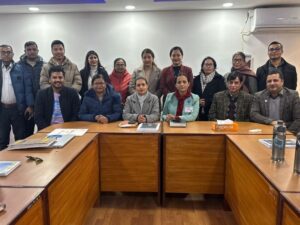
Final approval of Children Palliative Care training manual chaired by Director Yashoda Aryal