


Written by: Alex Daniels, Education Manager ICPCN and Gaby Duran, Education Officer, ICPCN.
Introduction:
West Africa is increasingly being recognised as a leading hub for Children’s Palliative Care (CPC) on the African continent. In Ghana and Nigeria, children living with life-limiting and life-threatening conditions and their families are experiencing the transformative impact of the dedication and commitment of key stakeholders working to relieve suffering and improve their quality of life. The International Children’s Palliative Care Network (ICPCN) and World Child Cancer (WCC) have been pivotal in advancing this progress, partnering closely with a diverse network of local, regional, and international organisations to drive sustainable change.
In February 2024, the #chilpalghana project was launched to strengthen the foundation for CPC in Ghana by providing context and building capacity. A comprehensive needs assessment revealed critical gaps in service delivery, workforce training, and public awareness. In response, a one-year programme was successfully implemented that included multi-professional training, interactive webinars, clinical placements, and active collaboration with three key Colleges responsible for specialist training in Ghana.
Train the Trainer:
With the overarching goal of embedding children’s palliative care education within Ghana’s health system and positioning West Africa as a hub for CPC, the #chilpalafrica project expanded last year to include a Train-the-Trainer (ToT) component for the first time. The aims and objectives of the train-the- trainer programme are:
a) To build capacity for delivering CPC training in Ghana
b) To provide a CPC Train-the-Trainers programme to a range of professionals working across Ghana and Nigeria through the Colleges.
c) To develop a group of professionals who can provide training on palliative care for children and young people across Ghana and Nigeria.
d) To build a community of practice of trainers for CPC in Ghana and Nigeria.
The programme aimed to strengthen CPC capacity by equipping healthcare professionals and educators with the skills to train others, thus creating a powerful multiplier effect across the region. Recruitment for the programme was carried out in partnership with the Ghana College of Physicians and Surgeons, the College of Nurses and Midwives, and the College of Pharmacists. A total of thirty participants took part in the programme, with Ghana serving as the focal point, while four participants from Nigeria joined, further broadening its regional impact.
Building on its success, the second ToT programme ran from May to July this year, further strengthening CPC capacity in the region. Health and social care professionals who had completed an introductory CPC course and were actively engaged in the field were invited to apply for the second Train-the-Trainer programme. Thirty-four participants from Ghana and Nigeria were selected, including 23 nurses, 7 doctors, 3 child life specialists, and 1 pharmacist. This multidisciplinary cohort reflected the collaborative nature of children’s palliative care and enriched discussions throughout the programme.Local and international facilitators supported the training programme.
The Train-the-Trainer programme began with four virtual sessions, each lasting 1.5 hours, delivered over three weeks. These sessions introduced participants to the principles of training-of-trainers, explored common challenges in delivering training, and provided guidance on effective teaching methods for both virtual and face-to-face settings.

Two days of in-person training were conducted in Accra, designed to provide hands-on, experiential learning. The sessions included practical workshops on communication skills, integrating clinical case studies, role-plays, and interactive lectures, incorporating games and exercises to enhance teaching methods. Participants practised facilitation techniques, received peer feedback, and explored creative approaches for engaging adult learners. Meeting in person for the first time, participants embraced the chance to collaborate across disciplines. Beyond the training, the networking opportunities proved invaluable, sparking knowledge exchange and reinforcing regional partnerships that will sustain CPC capacity well into the future. In addition, a series of training videos is being developed to support access to sustainable training.
Building on this foundation, two final 1.5-hour virtual sessions were held a few weeks later. In these sessions, each participant prepared and delivered a short teaching module, outlining the aims, training methods, resources, and practical strategies they planned to use when delivering a CPC education topic of their choice. This was a unique opportunity for participants to share their ideas and approaches to teaching, while receiving constructive feedback from subject experts in a supportive, contained environment.
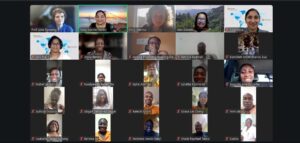
Participants brought great energy and enthusiasm to the ToT programme, engaging with creativity and passion. Their collaborative spirit fostered a dynamic learning environment, enriched the training, and underscored their commitment to advancing CPC. Their dedication will ripple outward, strengthening capacity and inspiring others across Ghana, Nigeria, and the wider region.
Conclusion:
The success of the programme rests firmly on the strength of partnership and collaboration. By working together with professional bodies, educators, healthcare providers, and international allies, the initiative has been able to build capacity, share expertise, and create a sustainable framework for CPC. These collective efforts ensure that knowledge is not only transferred but multiplied, reaching far beyond individual participants to transform care across the region.
Ultimately, it is this spirit of collaboration, bringing together diverse skills, perspectives, and commitments, that makes progress possible. As stakeholders continue to unite around a shared vision, the programme stands as a powerful example of how partnership can drive meaningful change and improve the quality of life for children and families in Ghana, Nigeria, and beyond.
Acknowledgements: The ICPCN team warmly extends its gratitude to Ayire Adongo, Adwoa Pinamang Boateng Desu, Juliet Akuamoah Boateng, Luke Capper, Dr Barbara Ossei Sekyere, Dr Joyce Bening, Dr Michael McNeil, Dr Emily Harrop, Dr Spandana Rayala, Dr Ernestina Schandorff, Dr Nihad Salifu, Rima Saad, and Anu Thelly for their invaluable support and contributions to the success of this programme.
